

Natural Supplements for Deep Sleep: A 2026 Guide
Last Updated: October 23, 2026
Quick Summary
Natural supplements for deep sleep support relaxation and rest through ingredients like glycine, L-theanine, and ashwagandha, which work best when taken 30-60 minutes before bed as part of a consistent wind-down routine. Unlike melatonin, these melatonin-free formulas support nervous system calm rather than directly triggering sleep onset, making them suitable for those seeking to avoid tolerance buildup.
- Glycine at 3 g and L-theanine at 200-400 mg are the most studied doses for sleep support in human trials.
- Melatonin-free supplements typically require 30-60 minutes before bed and work best with consistent sleep habits and a regular bedtime.
- Third-party seals verify ingredient identity and purity but do not prove a product works or that doses match research levels.
- Ashwagandha is most relevant if daytime stress interferes with sleep, not as a fast-acting sleep aid.
- Sleep supplements should not replace medical care for persistent insomnia, sleep apnea, or other sleep disorders.
Table of Contents
- Natural Supplements for Deep Sleep: What Works and Why
- Sleep Supplements Without Melatonin: Understanding Your Options
-
Key Ingredients in Natural Sleep Aids
- A quick note on what "deep sleep" means in the research
- Glycine: the strongest sleep-architecture signal among amino acids
- L-Theanine: reliable calm, weaker sleep-specific evidence
- Ashwagandha: stress-pathway support, not a sleep drug
- Taurine and apigenin: supporting cast, not headline acts
- Botanicals with traditional but thin clinical backing
- Matching ingredients to your sleep problem
- Additional Botanicals and Amino Acids for Nighttime Support
- Evaluating Sleep Supplement Quality and Safety
- How to Build a Natural Sleep Support Routine
- When to Seek Professional Guidance
- Conclusion
- Frequently Asked Questions
Natural Supplements for Deep Sleep: What Works and Why
Many adults struggle with racing thoughts at bedtime, and a growing number are exploring natural supplements for deep sleep instead of melatonin.

The challenge is finding one that supports restorative rest without melatonin or sedative ingredients. This guide covers the science behind key ingredients, what the research shows, and how to evaluate quality.
Sleep Supplements Without Melatonin: Understanding Your Options
Sleep supplements without melatonin offer an alternative pathway to relaxation.
The distinction matters because melatonin directly influences your circadian rhythm, and consistent use can lead to tolerance, where the same dose becomes less effective.
The trade-off is timing. Melatonin works quickly because it directly signals sleep onset. Melatonin-free supplements typically work best when taken 30-60 minutes before bed as part of a consistent wind-down routine.
Key Ingredients in Natural Sleep Aids
Most roundups of natural supplements for deep sleep present every ingredient as if the evidence were equally strong. It isn't. Some compounds have been studied in randomized, placebo-controlled human trials; others rest on small crossover studies, traditional use, or laboratory findings. Knowing which is which separates a formula that fits your sleep challenge from one that just sounds impressive.
A quick note on what "deep sleep" means in the research
Deep sleep usually refers to slow-wave sleep, the stage dominated by high-amplitude, low-frequency brain activity on a polysomnogram (Regulation and Functional Correlates of Slow Wave Sleep). It is distinct from sleep latency, total sleep time, and subjective grogginess, which many supplement studies measure instead. A formula can help you feel calmer at bedtime without evidence that it changes slow-wave sleep.
Glycine: the strongest sleep-architecture signal among amino acids
Evidence grade: moderate for sleep quality and next-day alertness; limited for slow-wave sleep specifically.
Glycine has been examined in small randomized, placebo-controlled crossover trials in adults with sleep complaints. Participants took roughly 3 g before bed, well above the 800 mg used in many combination formulas, and reported improved subjective sleep quality and reduced daytime sleepiness.
Practical takeaway: the studied dose is higher than what most combination products deliver.
L-Theanine: reliable calm, weaker sleep-specific evidence
Evidence grade: moderate for relaxation and stress reactivity; limited and mixed for objective sleep outcomes.
L-Theanine is one of the better-studied relaxation ingredients. Small randomized trials in healthy adults have found reduced subjective stress after doses in the 200-400 mg range (pubmed.ncbi.nlm.nih.gov).
Practical takeaway: 200-400 mg is the range most human studies have used. L-Theanine is best positioned as a wind-down ingredient that supports relaxation.
Ashwagandha: stress-pathway support, not a sleep drug
Evidence grade: moderate for stress and anxiety measures; preliminary for sleep outcomes.
Standardized ashwagandha root extracts have been studied in several small randomized controlled trials, mostly in adults with elevated stress.
Practical takeaway: ashwagandha is most relevant if your sleep problem is tangled up with daytime stress that follows you to bed. It is not a fast-acting sleep aid.
Taurine and apigenin: supporting cast, not headline acts
Evidence grade: preliminary for both.
Taurine is an amino acid involved in nervous-system and cellular function, studied for sleep mostly in animal models and small human studies, often in combination with other compounds. Apigenin is a flavonoid found in chamomile; laboratory work suggests it interacts with GABA-A receptors, but human sleep trials using isolated apigenin are scarce. Chamomile tea has modest human evidence for subjective calm, and that evidence does not transfer automatically to an isolated flavonoid.
Both are reasonable supporting ingredients in a multi-compound formula.
Botanicals with traditional but thin clinical backing
Valerian root, passionflower, lemon balm, and lavender appear in many natural sleep supplements. Valerian has the largest body of research, but trials are heterogeneous in dose, extract type, and outcome measures, and reviews have reached mixed conclusions. Passionflower and lemon balm have small, short trials with inconsistent results. Lavender has been studied mostly as aromatherapy, a different delivery route than an oral capsule.
Matching ingredients to your sleep problem
The most useful question is not "which ingredient is best" but "which ingredient fits my pattern."
| Your pattern | Ingredients with the most relevant evidence |
|---|---|
| Racing mind at bedtime | L-Theanine, glycine |
| Daytime stress carrying into the evening | Standardized ashwagandha |
| Support for light, easily disrupted sleep | Glycine |
| General wind-down support | Multi-ingredient formulas with L-Theanine and glycine |
If you want a deeper comparison of melatonin-free options and how they stack up, see our guide to the best sleep supplement without melatonin.
Additional Botanicals and Amino Acids for Nighttime Support
Beyond the primary ingredients, many melatonin-free sleep supplements include supporting compounds. Taurine is often included at 500-1000 mg, and apigenin, a plant flavonoid found in chamomile, at smaller doses (typically 50-100 mg). Valerian root, passionflower, and lemon balm appear in some formulas, used traditionally for relaxation though research varies. Combining ingredients that support relaxation through different mechanisms can be a thoughtful approach in melatonin-free formulas.
Evaluating Sleep Supplement Quality and Safety
Quality and safety advice usually stops at "look for third-party testing." That advice is correct but incomplete. Here is how to actually evaluate a product, and who should think twice before taking one.
Read the Supplement Facts panel like an editor
Three things matter on the panel, in this order:
- Serving size. A label that lists 800 mg of glycine per serving means nothing if a serving is three capsules and you plan to take one. Compare the per-serving amount to the dose used in research.
- Proprietary blends. If the panel lists a "proprietary blend" with a total milligram amount and no individual ingredient weights, you cannot verify whether any single ingredient is present at an effective dose. Blends are legal and common; they are also a way to hide underdosing.
- Standardization language. For botanicals, look for a standardized extract with a stated marker compound (for example, a withanolide percentage for ashwagandha). Unstandardized root powders vary widely in potency from batch to batch.
What third-party seals actually verify
Third-party programs differ in scope, and it helps to know what each one covers.
- NSF Certified for Sport and NSF/ANSI 173 verify that the product contains what the label says, does not contain certain contaminants above thresholds, and was produced in a facility that meets good manufacturing practice standards. The Sport program adds screening for substances banned in athletic competition.
- USP Verified covers ingredient identity, potency, and purity, plus manufacturing facility audits.
- ConsumerLab is an independent testing organization that publishes results; its seal indicates a product passed that organization's testing protocol.
What these seals do not do is prove the product works. They verify identity, potency, and purity. A certified product can still be formulated at doses too low to matter.
Contamination and adulteration risks specific to sleep products
Sleep supplements have a documented history of adulteration. The FDA has issued warnings about products marketed for sleep that contained undisclosed drug ingredients, including prescription-level antihistamines and, in some cases, controlled substances. The risk is highest with products sold as "alternatives" to prescription sleep medication or marketed with dramatic claims. Buying from established brands with transparent sourcing and third-party testing may help reduce this risk.
Interactions worth discussing with a clinician
Natural does not mean interaction-free. A few worth flagging:
- Ashwagandha may affect thyroid hormone levels and blood sugar. People taking thyroid, diabetes, or blood pressure medication should talk to their clinician before using it. It has also been associated with rare liver injury reports.
- Valerian may potentiate the effects of sedatives, including benzodiazepines and some antihistamines.
- L-Theanine is generally well tolerated but may interact with blood pressure medication in some people.
If you take prescription medication, bring the actual supplement label to your pharmacist for screening.
Who should avoid sleep supplements or seek care first
Some groups should not treat a supplement as a first step:
- People who are pregnant or breastfeeding. Most sleep ingredients have not been adequately studied in these populations.
- Older adults. Polypharmacy is common, and sedating ingredients can increase fall risk. Any new supplement should be reviewed with a clinician.
- People with persistent insomnia lasting more than a few weeks, or insomnia affecting daytime function. Cognitive behavioral therapy for insomnia (CBT-I) is a recognized treatment for chronic insomnia (Cognitive Behavioral Therapy for Insomnia (CBT-I): A Primer).
Red flags on a label or product page
- Promises of a specific outcome ("fall asleep in 10 minutes," "cure insomnia")
- Testimonials presented as clinical evidence
- No manufacturer address or contact information
For a closer look at how melatonin-free formulas are built and what to compare, our melatonin-free sleep supplement guide walks through the formulation decisions that separate thoughtful products from generic ones.
How to Build a Natural Sleep Support Routine
Taking a supplement alone isn't a complete sleep strategy.
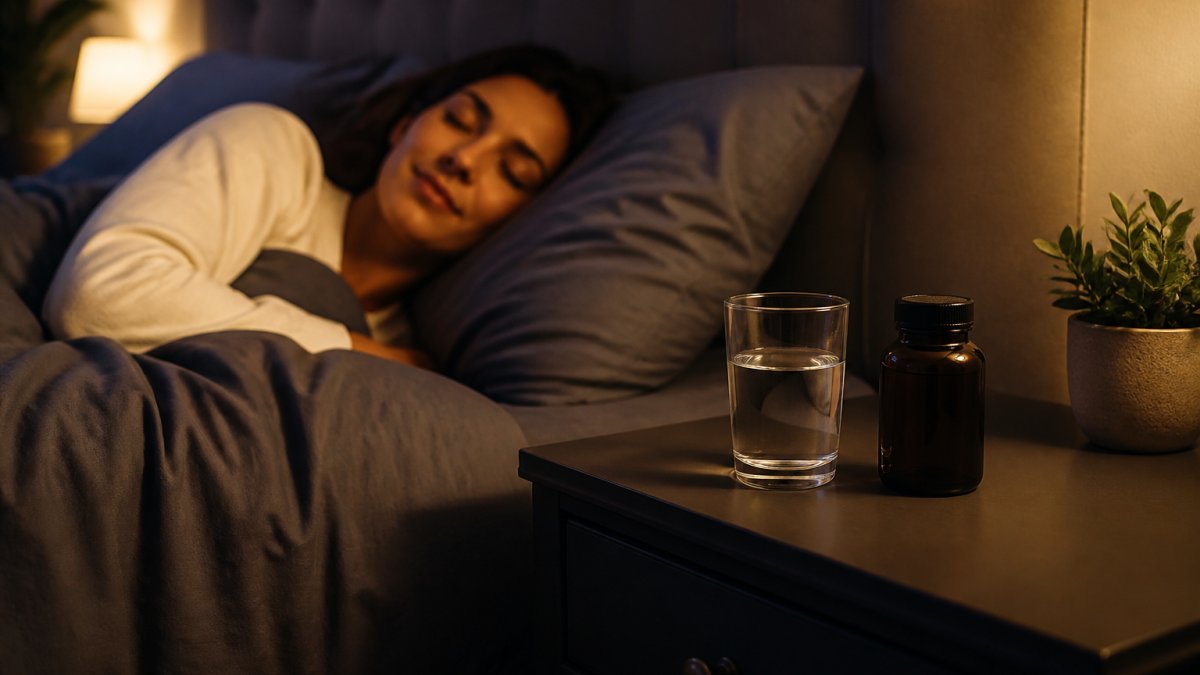
Set a consistent bedtime. Going to bed at the same time each night, even on weekends, helps regulate your sleep-wake cycle.
Limit caffeine after 2 PM. Caffeine's half-life means it's still circulating hours after consumption, interfering with both falling asleep and sleep quality.
Avoid large meals close to bedtime. Finish eating 2-3 hours before bed.
When to Seek Professional Guidance
Natural supplements for deep sleep support relaxation and rest, but they're not a substitute for medical care when underlying sleep disorders are present.
For most people seeking to support relaxation and establish a consistent bedtime routine, quality melatonin-free supplements like NOCTIS Deep Sleep, which combines glycine, L-theanine, taurine, Sensoril® ashwagandha, and apigenin, offer a thoughtful, non-habit-forming approach.
Conclusion
Natural supplements for deep sleep work best as part of a deliberate strategy that includes consistent sleep habits, a relaxing wind-down routine, and an optimized sleep environment.
Understanding what each ingredient does helps you evaluate whether a formula matches your sleep challenges. Glycine and L-theanine support calm and quiet racing thoughts. Ashwagandha addresses stress-related sleep interference.
For adults seeking melatonin-free support for relaxation and rest, NOCTIS Deep Sleep offers a premium option designed specifically for this purpose. The formula combines research-examined ingredients, supporting your natural ability to wind down. Try NOCTIS Deep Sleep and experience a thoughtfully formulated, melatonin-free approach.
Frequently Asked Questions
What are the best natural supplements for deep sleep?
Natural supplements for deep sleep work best when they combine multiple ingredients studied for relaxation and sleep support. Glycine, L-theanine, ashwagandha, and apigenin each play a role in helping your body wind down.
Are sleep supplements without melatonin safe to take every night?
Sleep supplements without melatonin, particularly those using amino acids and botanical extracts, are generally designed for nightly use as part of a consistent bedtime routine. However, safety depends on the specific formula, your health status, and any medications you take. Ingredients like glycine and L-theanine have been studied for regular use, but ashwagandha and other botanicals may interact with certain medications or health conditions. Always consult a healthcare provider before starting any new supplement regimen, especially if you take prescription medications or have existing health concerns.
How does ashwagandha for sleep differ from other natural sleep aids?
Ashwagandha is an adaptogenic herb studied for its role in stress management and relaxation. Unlike sedating herbs, ashwagandha works by helping your body manage stress and cortisol levels, which can indirectly support better sleep. It's often used alongside other ingredients like glycine and L-theanine to create a comprehensive sleep support formula. Ashwagandha may take longer to show effects than some other ingredients and works best when taken consistently over several weeks as part of your evening routine.
What should I look for when choosing a natural sleep supplement?
When evaluating natural sleep supplements, check for third-party testing, transparent ingredient lists with specific dosages, and clinical-grade extracts for botanicals. Look for melatonin-free formulas if you prefer to avoid melatonin. Verify that the supplement is manufactured in a regulated facility and follows good manufacturing practices. Read labels carefully to understand what each ingredient does and whether the doses are supported by research. Avoid products making disease-treatment claims, and prioritize supplements designed for consistent nightly use rather than occasional use.
Can natural sleep supplements interact with medications?
Yes, some natural sleep supplement ingredients can interact with medications, particularly blood thinners, anti-anxiety medications, and certain antidepressants. Ashwagandha and other botanicals may affect how your body metabolizes certain drugs. Amino acids like glycine and L-theanine are generally well-tolerated, but individual sensitivity varies. Before starting any natural sleep supplement, discuss it with your healthcare provider or pharmacist, especially if you take prescription medications, have a chronic health condition, or are pregnant or nursing.
Ready to support your sleep naturally? Many people find that combining a quality supplement with consistent sleep habits transforms their nighttime routine. Start with NOCTIS Deep Sleep and build the wind-down practices that work for your schedule. Better sleep starts with intentional choices, both the supplement you choose and the routine you build around it.
