

How to Improve Skin Texture Overnight: A Practical Guide
Table of Contents
- What You Can Actually Achieve Overnight
- Understanding What Causes Uneven Skin Texture
- Best Ingredients for Skin Texture Support
- How to Hydrate Skin Overnight
- Your Nighttime Skin Barrier Repair Routine
- Benefits of Copper Peptides for Skin
- When to See a Dermatologist
- The Overnight Texture Improvement Checklist
- Frequently Asked Questions
Last Updated: October 2, 2026
What You Can Actually Achieve Overnight
The desire to improve skin texture overnight sounds like a promise from a late-night infomercial. But the reality is more practical, and more achievable, than you might think.
Overnight improvements focus on hydration, supporting your skin barrier, and reducing the appearance of dryness. Your skin looks smoother, softer, and more refreshed by morning, cosmetic appearance changes, not permanent transformations. To truly improve skin texture overnight requires understanding what's actually possible, hydration and barrier support can make skin look smoother by morning, but real, lasting texture improvements take weeks or months of consistent care.
Understanding What Causes Uneven Skin Texture
Uneven skin texture builds gradually from several interconnected factors.
Dehydration makes skin look dull, feel rough, and show fine lines more clearly. Dehydrated skin also overproduces sebum, leading to congestion and bumpy patches.
A damaged skin barrier makes texture worse. When compromised, skin becomes sensitive, inflamed, and rough. Over-exfoliation, harsh cleansers, and extreme weather all damage it.
Dead skin cell buildup creates roughness. Accumulated cells trap moisture and prevent fresh skin from showing through.
Inflammation and congestion from acne, sensitivity, or stress make skin look bumpy and uneven.
Sun exposure and aging gradually break down collagen, contributing to textural changes, another reason consistent sun protection matters.
Best Ingredients for Skin Texture Support
For an overnight boost, focus on humectants, emollients, and barrier-supporting actives.
Humectants: The hydration foundation
Hyaluronic acid draws moisture into skin, plumping the surface and making texture look smoother within hours.
Glycerin is a reliable humectant used for decades.
Emollients and barrier repair: The seal
Functional actives: Support without irritation
Niacinamide (vitamin B3) reduces sebum, supports barrier function, and calms inflammation.
Panthenol (provitamin B5) hydrates, soothes, and helps skin retain moisture. It's safe for sensitive or irritated skin.
Copper peptides, specifically Copper Tripeptide-1 (GHK-Cu), support cell turnover and collagen production, improving texture appearance with consistent use.
Soothing and protective ingredients
Apigenin is a plant-derived antioxidant that calms inflammation. It's gentle for sensitive skin and pairs well with hydrating ingredients.
Allantoin and bisabolol reduce redness and roughness. Use these if your barrier is compromised or skin is reactive.
What NOT to mix overnight (the critical safety angle)
Knowing what not to combine matters most at night when skin repairs:
- Retinoids + AHAs/BHAs = barrier damage. Both increase cell turnover. Together, they over-exfoliate. Skip chemical exfoliants on retinoid nights; wait at least 3 days between them.
- Vitamin C + niacinamide = reduced efficacy. Use them at different times (vitamin C morning, niacinamide night).
- Multiple actives in one routine = irritation. Using more than one active per routine stresses your barrier. Stick to one active per routine, or alternate nights.
- Oils before hydrating serums = blocked absorption. Always layer light to heavy: hydrating toner → serum → moisturizer → oil.
The best overnight formulas combine these strategically. Humectants draw moisture in. Emollients lock it in. Barrier-supporting ingredients repair and protect.
How to Hydrate Skin Overnight
Hydration is the fastest way to improve how your skin looks by morning.
The hydration paradox: Why more products don't mean better results
The right sequence for overnight hydration
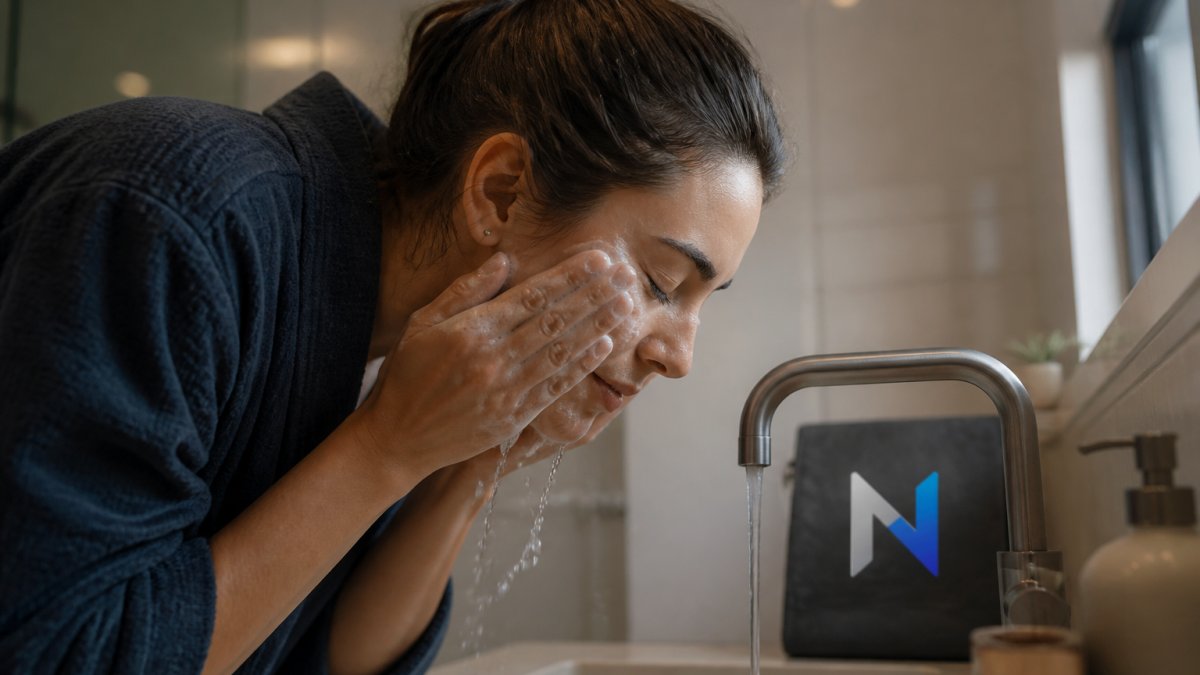
Step 1: Cleanse gently. Use lukewarm water and a mild cleanser. Hot water damages your barrier.
Step 3: Layer a hydrating serum. Look for hyaluronic acid or glycerin. Apply to damp skin.
Step 4: Use a rich night cream. Choose one with ceramides, squalane, and emollients.
Step 5: Optional, seal with a facial oil. A few drops of squalane seals in layers beneath.
Common hydration mistakes that backfire
Applying products to completely dry skin. Humectants need water to work. Always apply hydrating serums to damp skin.
Skipping the moisturizer. Serums are hydrating but not occlusive.
Layering too many products. A toner, serum, and moisturizer are enough. Multiple layers overwhelm your barrier and reduce absorption.
Your Nighttime Skin Barrier Repair Routine
Your skin barrier does its most important repair work at night.
Avoid active ingredients before bed. Retinoids, vitamin C, and chemical exfoliants are powerful and irritating. Use them in the morning or 2-3 times per week.
Cleanse gently. Use a non-foaming, creamy cleanser. Avoid hot water and harsh scrubs.
Apply barrier-supporting ingredients. Look for ceramides, cholesterol, and fatty acids. Niacinamide also supports barrier function and reduces irritation.
Use soothing ingredients if your barrier is damaged. Panthenol, allantoin, and bisabolol calm inflammation and reduce redness and roughness.
Avoid over-exfoliating. Chemical exfoliation removes dead skin cells but damages your barrier if overused. Limit to 1-2 times per week. Physical exfoliation is harsher; use sparingly.
Skip the extra steps. Stick to cleanser, hydrating toner, serum, and moisturizer. A simple routine is less likely to irritate a sensitive barrier.
Benefits of Copper Peptides for Skin
Copper peptides support cell turnover. They encourage skin to shed dead cells and produce fresh ones, making skin look smoother and more even. Consistent use for 4-8 weeks shows noticeable results.
They support collagen production. Copper peptides signal your skin to make more collagen, improving firmness and reducing the appearance of fine lines and texture.
Copper peptides are gentle. Unlike retinoids or strong acids, they don't irritate or damage your barrier. You can use them every night without worry.
They support antioxidant function. Copper is a trace mineral your skin needs for health.
They work well in hydrating formulas. Copper peptides pair perfectly with humectants and emollients.
Real, lasting improvements to skin texture come from consistent use of supportive ingredients like copper peptides. One night won't transform your skin, but a month of nightly use absolutely will.
When to See a Dermatologist
Some texture issues need professional help. Know when to stop relying on at-home care and see a dermatologist.
If texture doesn't improve after 8-12 weeks of consistent care, something else might be going on.
If you have severe acne scarring or pitting, professional treatments like microneedling or laser resurfacing may help. At-home care can't address deep textural damage.
If your skin is extremely sensitive or reactive, a dermatologist can rule out allergies, sensitivities, or barrier dysfunction that needs medical attention.
If you're on medications that affect skin, ask your doctor. Some medications cause dryness or texture changes that require professional guidance.
A dermatologist can also recommend treatments you can't get at home, like chemical peels or professional-grade actives. Don't hesitate to ask for help if your texture isn't improving.
The Overnight Texture Improvement Checklist
Use this checklist to build your nighttime routine. Not every step is necessary, customize based on your skin's needs.
| Step | What to Do | Why It Matters |
|---|---|---|
| Cleanse | Use a gentle, creamy cleanser with lukewarm water | Removes dirt and makeup without damaging barrier |
| Hydrate | Apply hydrating toner, essence, or serum | Draws moisture into skin and plumps texture |
| Treat | Use a barrier-supporting cream or copper peptide formula | Repairs barrier and supports skin renewal |
| Seal | Apply moisturizer or facial oil | Locks in all hydration and prevents water loss |
| Protect | Sleep on a clean pillowcase | Reduces friction and prevents bacteria transfer |
Tonight's routine:
- Cleanse with gentle cleanser
- Apply hydrating toner or essence
- Layer hydrating serum
- Apply night cream with barrier-supporting ingredients
- Optional: Add facial oil to seal
- Sleep 7-8 hours
Weekly additions (not nightly):
- 1-2 times per week: gentle chemical exfoliation (AHA or BHA)
- 1-2 times per week: hydrating face mask
- Avoid: retinoids, vitamin C, or strong actives right before bed
Consistency matters more than perfection. A simple routine you stick to every night beats a complicated one you skip. Your skin will thank you by morning.
Improving skin texture overnight starts with the right approach to hydration and barrier support. The strategies in this guide work because they address what actually affects your skin's appearance in a single night: water loss and barrier damage.
For lasting texture improvement, consistency is key. A nightly routine that supports hydration, barrier health, and gentle cell renewal will show real results in 4-8 weeks. If you're looking for premium nighttime support that combines deep hydration with restorative ingredients, consider pairing your skincare routine with NOCTIS Deep Sleep, a melatonin-free supplement designed to help you wind down and support a consistent bedtime routine, so your skin gets the quality rest it needs to repair and renew overnight. The right nighttime skincare combined with quality sleep can transform how your skin looks and feels.
Frequently Asked Questions
Can you actually improve skin texture overnight?
Overnight improvements are primarily cosmetic and hydration-based. Your skin can look noticeably smoother, softer, and more refreshed by morning through deep hydration and supporting your skin barrier. However, lasting changes to skin texture, such as reducing bumps, refining pore appearance, or addressing congestion, require consistent skincare over weeks or months. Think of overnight improvements as reducing the appearance of dryness and helping your skin look its best by morning, not permanently transforming texture.
What are the best ingredients for skin texture improvement?
Hydrating humectants like hyaluronic acid and glycerin draw moisture into skin. Emollients such as squalane and ceramides support your skin barrier and lock in hydration. Niacinamide helps balance sebum and reduce the appearance of pores. For longer-term texture refinement, gentle chemical exfoliants like lactic acid (an alpha hydroxy acid) and polyhydroxy acids support cell turnover without over-stripping your barrier. Copper peptides, particularly Copper Tripeptide-1, support collagen production and promote visibly healthier-looking, more resilient skin over time.
How does the skin barrier affect skin texture?
A healthy skin barrier regulates hydration and protects against irritation and inflammation, all of which directly impact how smooth and resilient your skin appears. When your barrier is compromised, skin becomes dry, flaky, and uneven. Supporting your barrier through gentle cleansing, avoiding over-exfoliation, and using barrier-supporting ingredients like ceramides, cholesterol, and panthenol helps your skin retain moisture and look smoother by morning. Barrier repair is foundational to improving texture both overnight and long-term.
What's the difference between immediate hydration and long-term texture improvement?
Immediate hydration, achieved through humectants and occlusive ingredients, plumps skin and reduces the appearance of dryness overnight, making texture look smoother and softer. Long-term texture improvement requires consistent use of ingredients that support cell turnover (like gentle exfoliants), collagen production (like copper peptides), and barrier health (like ceramides and niacinamide) over weeks and months. Your overnight routine supports both: it hydrates skin immediately and, when repeated nightly, contributes to lasting texture refinement.